
Menu
Why You Might Need a Concrete Retaining Wall in Pueblo
Concrete Retaining Wall Pueblo
Properties throughout Pueblo face unique challenges due to our region’s varied terrain and climate conditions. From sloped lots near the Arkansas River to hillside homes overlooking the valley, many homeowners discover they need structural solutions to manage soil movement and water drainage. A concrete retaining wall addresses these issues while adding functional beauty to your landscape. Understanding when and why you might need one helps protect your property investment and prevents costly damage down the road. Whether you’re dealing with existing erosion problems or planning new construction on challenging terrain, recognizing the signs early makes all the difference.
Erosion Control on Sloped Properties
Erosion control methods are a necessity for property owners in Pueblo’s semi-arid climate. While Pueblo enjoys more than 300 sunny days per year, extreme summer thunderstorms and rapid spring snowmelt can have devastating effects on unprotected slopes. Rainwater rushes down the slopes, taking with it, and can even expose the foundations of homes to possible damage. In neighborhoods with various elevation changes, such as near Mineral Palace Park, property owners would greatly benefit from the use of properly stabilized slopes.
While soil erosion affects how a yard looks, it is a threat to your home’s structural integrity. As the soil is washed away from the foundation of a home, the soil can begin to settle, resulting in cracks in the walls and floors. Topsoil is removed from garden areas, leaving little to no soil for gardening and landscaping. Also, erosion creates unsightly gullies and large bare patches that will collect water during rainy days. A properly designed concrete retaining wall catches runoff before it reaches a destructive force and redirects the water to a more suitable area for draining while keeping the soil securely in place.
Colorado has unique soils, and understanding the composition of Pueblo’s soil helps explain why retaining walls matter here. Pueblo lies in a geographic area with varying soil types, and one of the predominant soil types in this area is clay-based soil. Clay soils grow when they are moistened and shrink when they are dried out. This constant expansion and contraction create movement that typical landscaping cannot manage. In addition, Pueblo’s area experiences wind erosion, primarily in the drier winter months when there is little vegetation covering the soil, and exposed soil is vulnerable to the wind.
Terracing of Steep Slopes to Create Useful Outdoor Space on Sloping Properties
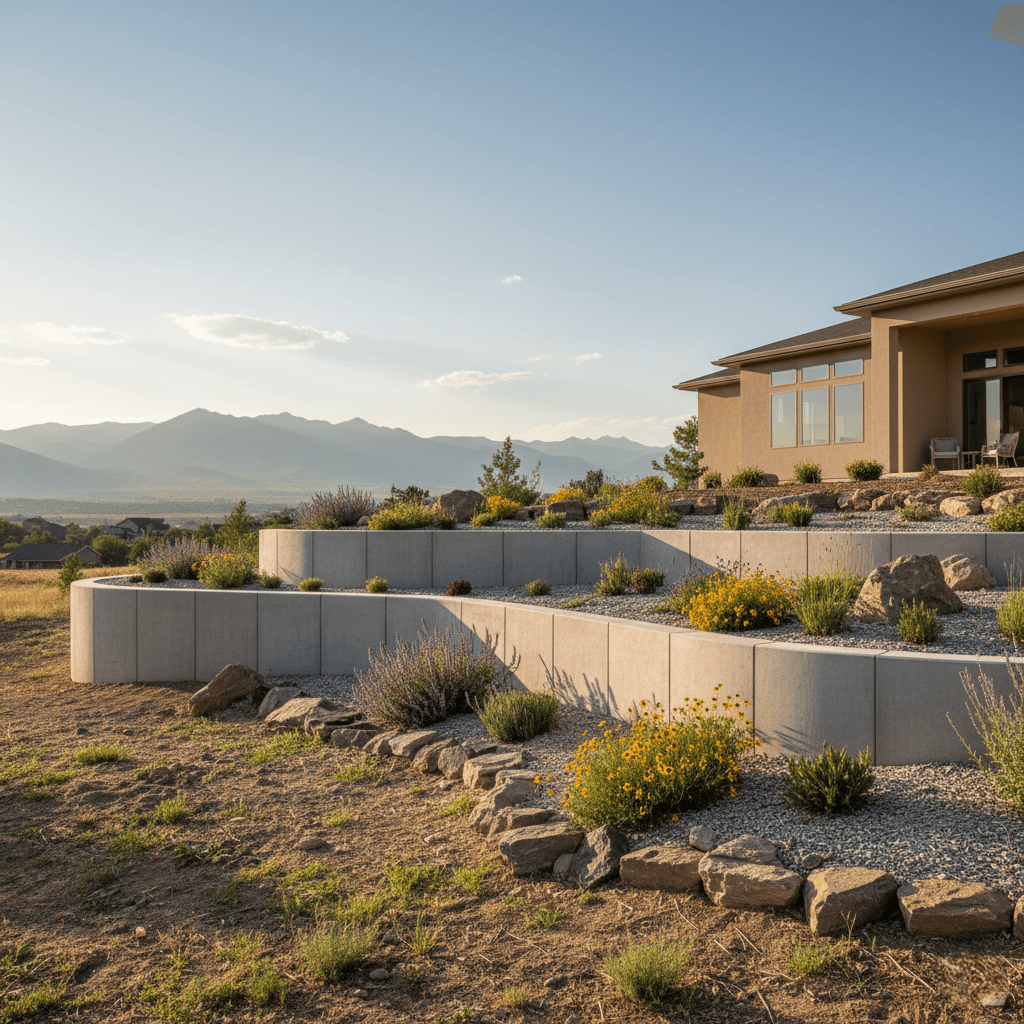
Properties in Pueblo often have steep slopes that limit the amount of usable outdoor space available. Many of the yards have steep inclines, limiting gardening opportunities, reducing play areas for children and pets, and making it difficult to entertain outdoors. By creating terraced yards using retaining walls, steeply sloped properties can be transformed into functional outdoor living spaces. With each level being a flat area, the yard can be divided into usable areas for patios, gardens, and/or lawns, increasing the usable space available in the yard without increasing the overall square footage of the property.
The versatility in designing a terraced yard far exceeds that of a flat yard. For example, a lower patio can be used for entertaining near Nob Hill, a middle-level raised bed can be used for gardening, and an upper lawn area can be used for recreational activity. Each level can be used for different purposes, and the retaining walls separating each level can function to retain the soil. Therefore, properties that have constraints due to zoning or setbacks on the amount of land they can build horizontally, but still have room vertically, can utilize terracing to create more usable space in their yard.
Foundation Support and Drainage Solutions
Proper water management is one of the primary functions that a well-designed concrete retaining wall system provides. Water accumulation near foundations creates hydrostatic pressure that can break walls and leak into basements. Inadequate drainage also results in soil saturation, reducing the bearing capacity of the soil and possibly causing the foundation to settle.
Properties located below their neighbors or located at the base of a hill or mountainous area are especially susceptible to poor drainage and require engineered solutions to address these problems. A well-designed retaining wall system must include adequate drainage features to prevent water accumulation behind the wall. Weep holes must be provided to allow water to drain out of the back of the wall, and drainage pipes must be placed behind the wall to collect and direct groundwater away from both the wall and the foundation. The backfill material behind the wall should be gravel to create a porous area that encourages the movement of water towards the drainage outlet, as opposed to moving through the retained soil. These combined drainage features will ensure that the structural stability of both the wall and the foundation is maintained for decades.
Damage Prevention
In addition to foundation-related problems, poor drainage creates several other problems. Soil that is saturated with water lacks strength and is highly susceptible to sliding, especially during free-thaw cycles, which are common in Pueblo’s winter months. Standing water creates a haven for mosquitoes during the warmer months. Roots in saturated soil lack oxygen, and plants and trees will decline or die. The drainage problems caused by poor retaining wall design can be eliminated by utilizing a properly designed and constructed retaining wall system.
Property Values
Well-planned and properly constructed retaining walls can increase the value of your property. Homeowners and prospective homeowners view well-engineered retaining walls as a desirable improvement that reduces their future maintenance concerns. Well-designed retaining walls add to the curb appeal of a property, and if constructed with aesthetically pleasing materials that blend with the style of your house, they will be viewed positively by prospective buyers. Properties located near the historic district of the Pueblo Riverwalk are particularly enhanced by retaining walls that add character while solving the problems associated with the hilly terrain of this area.
Insurance Premium Reduction
Homeowners who install a properly designed and constructed retaining wall may also be eligible for reduced insurance premiums. Insurance companies recognize that properties protected from water and soil movement by retaining walls are at lower risk of damage than properties without retaining walls. Documenting the professional installation of the retaining wall and having an engineer certify that the retaining wall was designed and constructed according to industry standards will further increase the likelihood of receiving reduced premiums.
Long-Term Savings
Another way that retaining walls can help property owners save money is by eliminating expensive repairs that may be required to fix damage caused by poor drainage or erosion. Property owners who install a retaining wall system to eliminate drainage and erosion problems before the problem gets out of hand will avoid paying thousands of dollars for repairs that may be required to fix damage that could have been prevented.
Soil Movement and Settlement Prevention
Gravity pulls down on slopes and exerts lateral earth pressure on the slope to seek the angle of repose, where the soil naturally settles. If the slope is not supported structurally, gravity will win, and the soil will gradually slump or suddenly collapse. Most properties in Pueblo, regardless of whether they were developed previously or newly constructed, struggle with the issue of soil movement as a result of natural processes such as seasonal moisture variation and disturbances to the natural slope.
Concrete retaining walls provide the structural resistance required to resist lateral earth pressure for as long as the retaining wall remains intact. To design a retaining wall that will provide sufficient strength to resist lateral earth pressure, engineers must consider factors such as the type of soil, the angle of the slope, the height of the wall, and any surcharge loads from buildings or vehicles above the wall. Once the factors are calculated, the engineer can design a wall that will remain stable for as long as desired, and can be designed to hold slopes at an angle that is much steeper than the soil can naturally support.
Code Compliance
Building regulations in Pueblo govern the construction of retaining walls to ensure the safety of the general public and the structural integrity of the wall. Walls that are greater than a certain height must be permitted by a municipal authority and must bear a stamp of approval from a licensed professional engineer. There are two main reasons for regulating retaining walls. First: poorly designed or constructed walls can fail catastrophically and harm people and property. Second: if the wall fails, the cost of repairs and cleanup can be very high. Therefore, it is essential to plan and construct the retaining wall in accordance with the applicable building codes to minimize the chance of failure and to avoid costly repairs.
Utilizing Licensed Contractors
Licensed contractors that specialize in retaining wall construction and are knowledgeable about local regulations can assist property owners in obtaining permits and completing the inspection process efficiently. They know what walls require engineering, what inspections are required, and how to submit the proper documentation. Furthermore, having the proper documentation regarding the retaining wall will aid in the sale of the property in the future. Today, it is becoming increasingly common for prospective buyers to ask sellers to document improvements made to the property, such as retaining walls, to verify compliance with building codes. Having the proper documentation can be a marketing advantage when selling the property.
Driveway and Parking Area Support
Many Pueblo property owners require retaining walls to support their driveways on sloping properties. Without proper retention, gravel will migrate down the slope, asphalt edges will deteriorate, and the driveway surface will develop low spots or cracks. A retaining wall creates a stable edge along the driveway, which maintains the driveway elevation and prevents soil from migrating onto the paved surface. This application is especially important for properties near areas such as Bessemer Park, where terrain variations affect access roads.
Parking areas also experience similar difficulties as driveways when located on or near slopes. Repeated vehicle traffic creates additional stresses on the soil, accelerating erosion and settlement. A concrete retaining wall provides the necessary strength to support vehicle traffic for extended periods of time and maintains a clean border between the parking surface and the surrounding landscaped area. Proper drainage integration ensures that water from the parking area drains away instead of accumulating behind the wall, thus protecting the structural integrity of the wall.
Flexibility in Garden and Landscaping Design
Hillside landscaping becomes significantly simpler when the hillside is terraced with retaining walls. Each level can be planted with different species of plants depending on the level of sunlight and drainage that the location receives. Lower levels can be planted with shade-tolerant plants, while upper levels can be planted with plants that require full sun, thereby maximizing growing opportunity across the entire property. Raised beds created by retaining walls provide improved drainage for plants with shallow roots, as well as improved growing conditions for vegetables and flowers.
Design flexibility extends beyond choosing plant species to overall landscape aesthetics. Walls create visual interest through level changes that a flat yard cannot achieve. Outdoor lighting positioned on the walls can accentuate architectural features while enhancing nighttime safety. Benches created into or against the walls can become comfortable outdoor seating areas with natural backs and weather protection. These design options turn challenging slopes into landscape assets that equal or surpass the quality of flat yards.
When to Build a Concrete Retaining Wall
There are several clear indications that your property needs a retaining wall. Obvious signs of erosion, including exposed roots, gullies, and soil accumulation at the base of the slope, are immediate indicators that action is needed. Cracks in foundations or basement walls may indicate soil movement that requires structural repair. Standing water that lingers after a rainfall indicates that the water is unable to drain, and installing a retaining wall system can solve this drainage problem. New construction on sloping lots usually requires a retaining wall to be built as part of the construction process, rather than trying to work with the existing slope.
Scheduling the construction of your retaining wall at strategic times can maximize the benefits and minimize disruptions. Spring and fall are optimal seasons for constructing a retaining wall, as they avoid both the heat of summer and the cold of winter. By scheduling construction prior to landscaping projects, you can integrate the walls with the overall design of your property. By correcting problems early, before minor erosion becomes major damage, you can save money compared to repairing foundations and/or replacing lost soil. Consulting with professionals as soon as you realize you have problems or when you plan new construction will enable you to receive the best solutions tailored to your individual needs.
Importance of Professional Construction
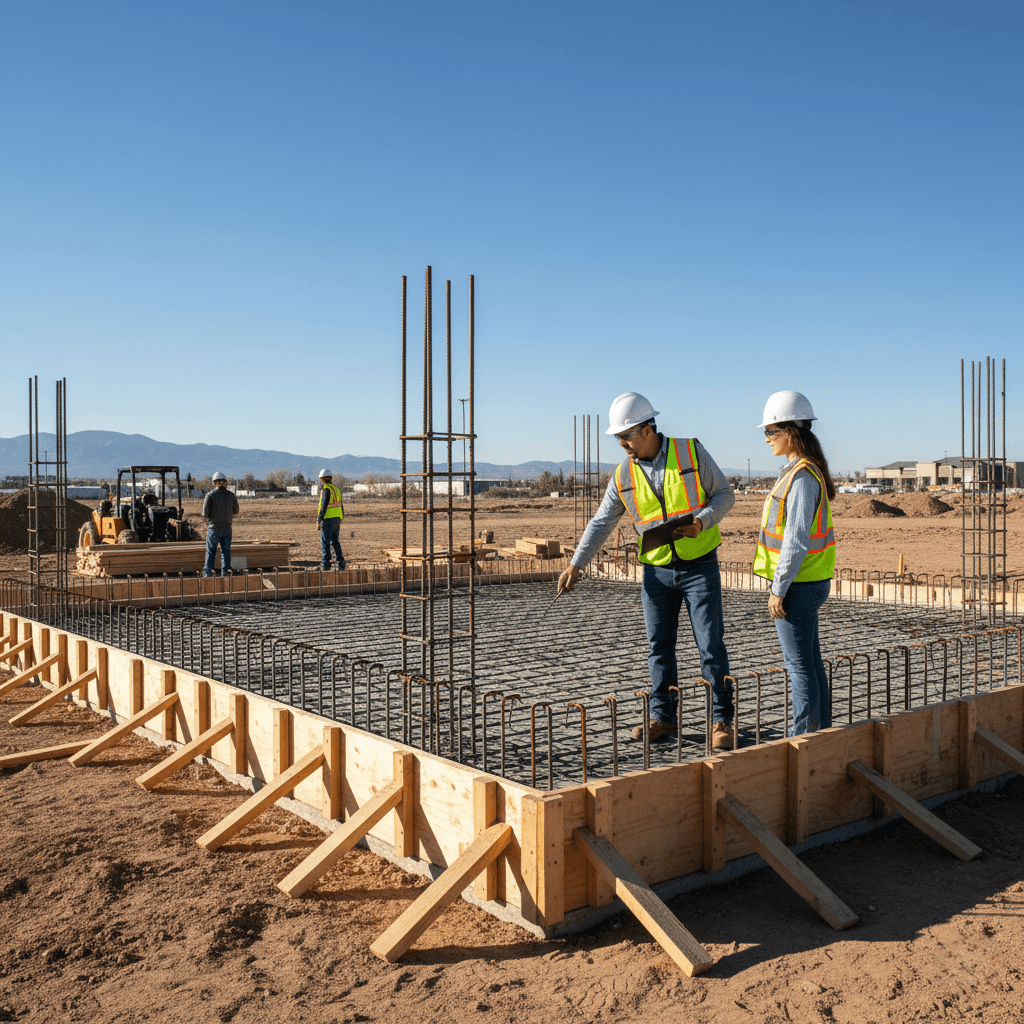
Constructing a retaining wall is a complex task that involves more than simply piling up blocks or pouring concrete. Site preparation, the depth of the foundation, the type of backfill material used, and the inclusion of drainage features all impact how well your retaining wall will perform over a period of years. Engineers consider various design parameters for the retaining wall,l such as the lateral earth pressure exerted on the wall, the bearing capacity of the soil, and the structural load that the wall must withstand. Only a professional contractor who has experience with retaining wall construction possesses the knowledge to accomplish this.
At Pueblo Concrete Services, we have extensive experience in the construction of concrete retaining walls throughout Pueblo. Our experienced staff understands the characteristics of local soils, the challenges posed by Pueblo’s climate, and the regulatory requirements imposed by local authorities that dictate how retaining walls must be designed and constructed. From the moment we assess your site until the completion of your landscaping, we take care of everything associated with your retaining wall project with the same degree of care and attention to detail to assure long-term performance. Whether you require slope stabilization near the Runyon Field Sports Complex or you wish to create terraced gardens on a hillside, Pueblo Concrete Services will deliver solutions engineered to last.
LATEST POSTS