
Menu
How Thick Should a Concrete Slab Be for Pueblo Homes?
Concrete Slab Pueblo
Determining the proper concrete slab thickness for your Pueblo home requires understanding local conditions, intended use, and building code requirements. The right thickness ensures structural integrity, prevents premature cracking, and maximizes your investment’s longevity. Pueblo’s unique soil composition, climate patterns, and elevation create specific challenges that influence slab specifications. Choosing appropriate thickness involves balancing cost considerations with performance requirements for decades of reliable service. This comprehensive guide helps homeowners make informed decisions about concrete slab specifications for various residential applications throughout Pueblo.
Standard Residential Slab Thickness Guidelines
Most residential concrete slabs in Pueblo range from four to six inches thick, depending on their application. The International Residential Code establishes minimum thickness requirements that serve as starting points for design decisions. However, local conditions often necessitate exceeding these minimums for optimal performance. Understanding standard guidelines provides a foundation for evaluating your specific project needs.
Four-inch slabs represent the minimum thickness for most residential applications supporting light loads. This thickness works adequately for patios, walkways, and light-use areas experiencing primarily foot traffic. Six-inch slabs provide enhanced durability for driveways, garage floors, and areas supporting vehicle weight. Properties throughout neighborhoods like Aberdeen and Belmont typically employ these standard thicknesses. However, site-specific factors frequently require adjustments to these baseline measurements for Pueblo conditions.
Foundation Slabs for Pueblo Homes
Slab-on-Grade Foundations
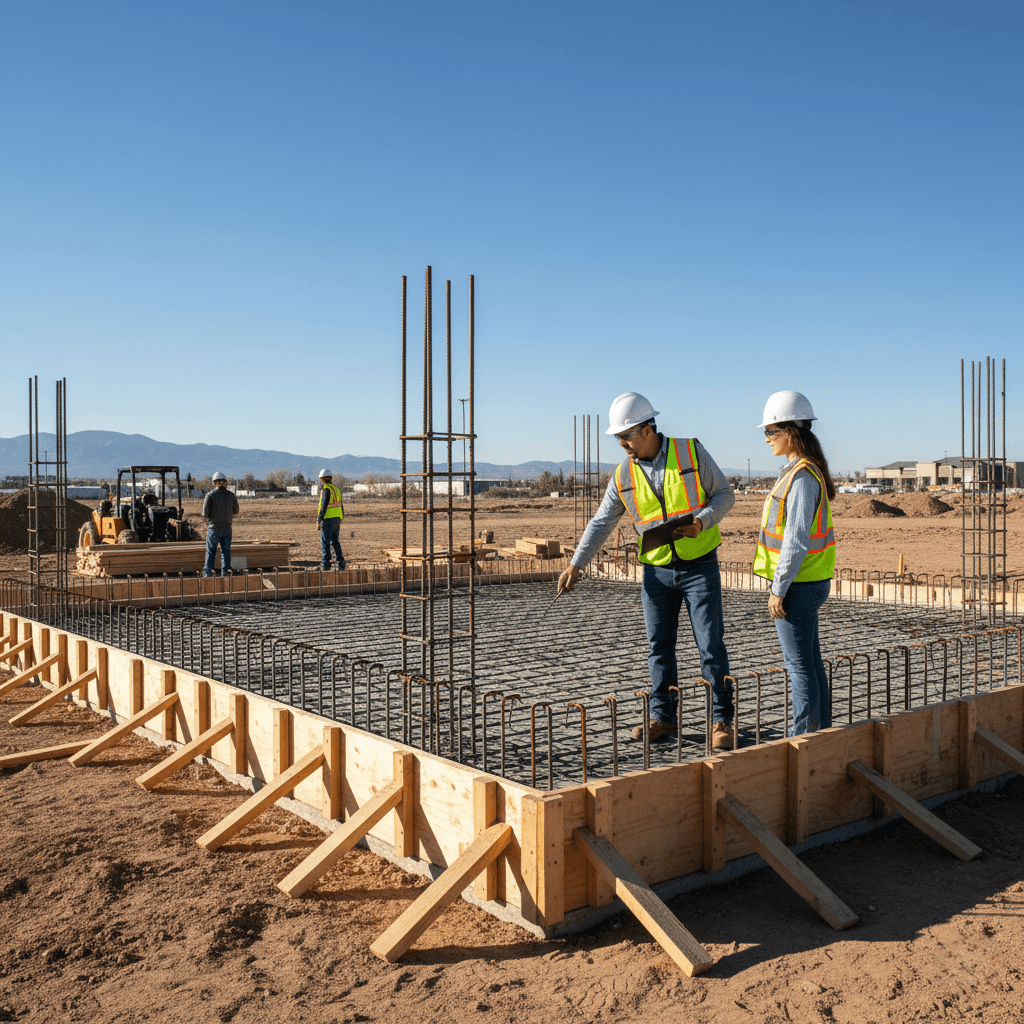
Residential slab-on-grade foundations typically measure six inches thick at a minimum for Pueblo homes. This thickness provides adequate load distribution for single-story structures across the entire footprint. The slab supports all structural loads directly, transferring weight to the soil beneath without intermediate support systems. Proper thickness prevents settlement cracks and ensures long-term stability despite Pueblo’s expansive clay soils.
Homes with heavy load concentrations, like bearing walls or support columns, may require localized thickness increases. These thickened areas, called footings, often measure 12 to 18 inches deep and extend two feet wide. They distribute concentrated loads over larger soil areas, preventing differential settlement. Properties in University Park and Eagleridge commonly utilize slab-on-grade construction with appropriate thickness variations. The foundation design must account for Pueblo’s freeze depth, typically 30 to 36 inches below grade.
Basement Floor Slabs
Basement floor slabs generally measure four inches thick since basement walls carry the home’s structural loads. The floor slab primarily resists soil pressure from beneath and provides a level surface. However, slabs supporting significant weight concentrations like masonry fireplaces need increased thickness in those areas. Proper base preparation becomes crucial for basement slabs to prevent cracking from settling.
Waterproofing considerations influence basement slab specifications in Pueblo. The clay soil retains moisture, creating hydrostatic pressure against basement structures. A four-inch slab with proper vapor barrier and drainage systems manages this pressure effectively. Properties in areas like Mesa Junction with higher water tables require careful attention to moisture management. The slab thickness alone cannot prevent water infiltration without comprehensive waterproofing measures.
Driveway Slab Thickness
Residential driveways serving standard passenger vehicles require a four-inch minimum thickness throughout Pueblo. This specification accommodates vehicles weighing up to 8,000 pounds without excessive stress. However, we typically recommend five to six inches for enhanced durability and longevity. The additional thickness provides a safety margin against unexpected loads and improves crack resistance over time.
Driveways accommodating heavier vehicles like RVs, boats, or commercial trucks need a six to eight-inch thickness. The increased mass creates significantly higher point loads that thinner slabs cannot handle safely. Driveway edges require particular attention, with perimeter areas benefiting from one to two inches of additional thickness. Properties throughout Belmont and Country Club commonly feature these enhanced specifications. The thicker edges resist cracking from vehicle wheels rolling over the perimeter, a common failure point in driveways.
Garage Floor Requirements
Detached and attached garage floors typically measure four inches thick for standard residential use. This thickness handles regular vehicle parking, tool storage, and typical garage activities. Garages housing heavy equipment, workshop machinery, or serving as workspaces benefit from a six-inch thickness. The enhanced structure prevents cracking from concentrated loads and improves surface durability.
Reinforcement becomes particularly important in garage slabs regardless of thickness. Wire mesh or fiber reinforcement distributes stress throughout the slab, preventing crack propagation. Properties planning to use garages for automotive repairs or heavy equipment storage should specify six-inch slabs from the start. Increasing thickness later proves impossible without complete replacement. Neighborhoods like Skyview and West Park feature various garage floor specifications based on homeowner needs and intended use patterns.
Patio and Outdoor Living Spaces
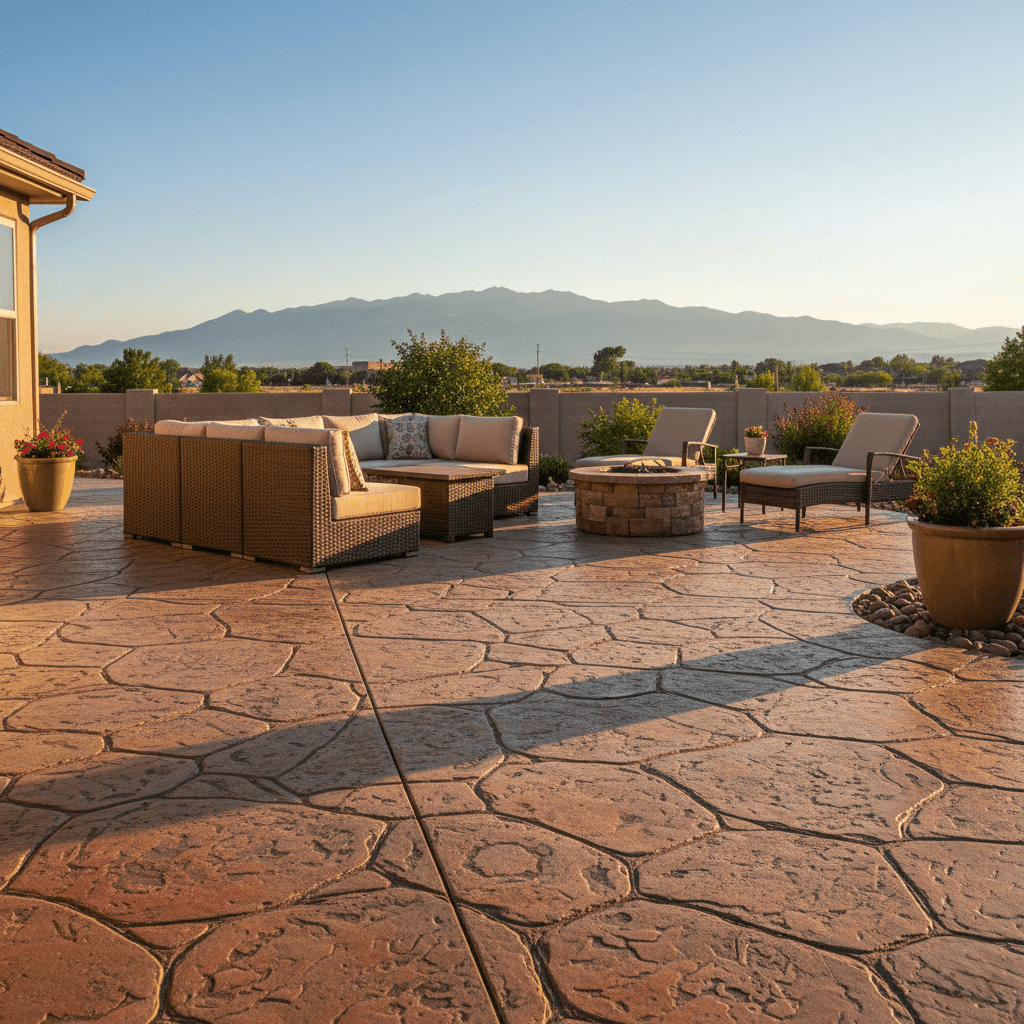
Concrete patios generally require a four-inch thickness when supporting only outdoor furniture and foot traffic. This standard specification provides adequate strength for typical residential patio applications. Stamped or decorative concrete patios use the same four-inch minimum despite their enhanced appearance. The decorative treatments do not affect structural requirements or necessary thickness.
Patios supporting heavy features like outdoor kitchens, fireplaces, or hot tubs need localized thickness increases. These areas typically require six to eight inches of concrete to handle the concentrated weight safely. The thickened sections extend several feet beyond the feature’s footprint to distribute loads properly. Properties throughout Pueblo incorporating elaborate outdoor living spaces commonly employ these variable thickness designs. We calculate specific requirements based on the feature’s weight and footprint dimensions.
Sidewalk and Walkway Specifications
Residential sidewalks and walkways typically measure four inches thick throughout Pueblo. This thickness adequately supports pedestrian traffic while providing reasonable durability. Walkways occasionally crossed by service vehicles or lawn equipment benefit from maintaining the four-inch standard. The minimal vehicle traffic does not justify increased thickness in most situations.
Sidewalks adjacent to driveways where vehicles cross require enhanced thickness, matching the driveway specification. These transition areas experience vehicle loads that standard sidewalk thickness cannot handle. We typically extend the driveway’s thickness several feet beyond the crossing point to prevent edge cracking. Properties in neighborhoods like Heritage and Sunset commonly feature these integrated designs. The seamless transition between different thickness zones requires careful planning during the initial installation phase.
Factors Affecting Thickness Requirements
Soil Conditions in Pueblo
Pueblo’s clay-rich soil significantly influences concrete slab thickness requirements. Clay expands when wet and contracts when dry, creating movement beneath slabs. This expansive soil behavior increases stress on concrete, potentially causing cracks in inadequately thick slabs. Properties throughout Pueblo must account for this soil characteristic in thickness determinations.
Soil bearing capacity tests reveal how much weight the ground can support safely. Poor soil conditions sometimes necessitate increased slab thickness to distribute loads over larger areas. Alternatively, improved base preparation with proper compaction can maintain standard thickness specifications. We evaluate soil reports carefully to recommend appropriate thickness adjustments. Areas with better soil conditions occasionally allow slightly reduced thickness, though we rarely recommend this approach given the minimal cost savings.
Climate and Weather Patterns
Pueblo’s freeze-thaw cycles create internal stress within concrete slabs. Thicker slabs generally resist this stress better than minimum thickness installations. The additional mass provides thermal stability that reduces temperature-related movement. However, thickness alone cannot prevent freeze-thaw damage without a proper concrete mix design, including air-entrainment.
Temperature extremes between summer heat and winter cold cause concrete expansion and contraction. Adequate thickness combined with proper control joint spacing manages this movement effectively. Properties in Pueblo experience approximately 100 freeze-thaw cycles annually, making durability considerations crucial. The thickness must work in conjunction with appropriate reinforcement and joint placement to achieve optimal performance throughout our climate’s challenges.
Reinforcement Considerations
Reinforcement type and placement interact with slab thickness to determine overall strength. Wire mesh reinforcement typically suffices for four-inch residential slabs supporting moderate loads. The mesh sits approximately mid-depth within the slab, providing tensile strength that concrete naturally lacks. Proper placement ensures the reinforcement functions effectively when the concrete experiences tension.
Rebar reinforcement becomes advisable for slabs six inches or thicker, particularly those supporting heavy loads. The steel bars provide superior tensile strength compared to wire mesh, preventing crack propagation. We space rebar according to engineering specifications based on expected loads and slab dimensions. Properties throughout Pueblo incorporating rebar typically see enhanced long-term performance. Fiber reinforcement presents another option, mixing directly into the concrete for distributed strength throughout the slab thickness.
Base Preparation Impact
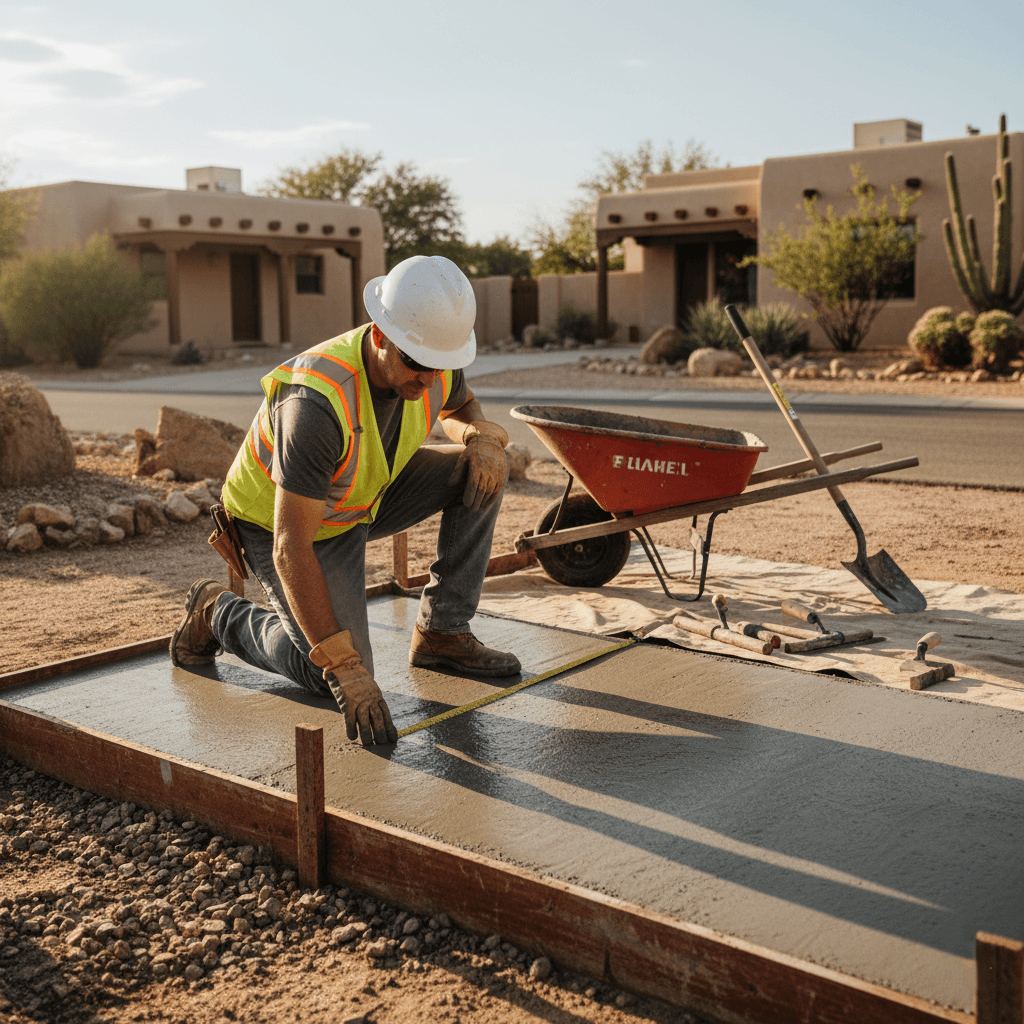
Proper base preparation proves as important as thickness in determining slab performance. A well-compacted gravel base four to six inches deep provides stable support for the concrete. Poor base preparation causes settling that leads to cracking regardless of concrete thickness. The base must drain water effectively to prevent soil softening beneath the slab.
Pueblo’s soil conditions often require enhanced base specifications beyond minimum standards. Adequate compaction using mechanical equipment ensures the base will not settle under the concrete’s weight. We test compaction levels to verify proper preparation before concrete placement. Properties in areas like Northside and Mesa Junction with challenging soil benefit particularly from thorough base preparation. The investment in proper base work pays dividends through improved slab performance over decades of service.
Cost Implications of Thickness
Increasing concrete slab thickness from four to six inches raises material costs by approximately 50 percent. A 500-square-foot slab requires 6.2 cubic yards at four inches versus 9.3 cubic yards at six inches. The additional 3.1 cubic yards costs roughly $400 to $500 in materials and delivery. However, this represents a small percentage of the total project cost, including labor and site preparation.
The long-term value of appropriate thickness far exceeds the modest additional investment. Premature failure from inadequate thickness costs thousands in replacement expenses. Proper thickness specification the first time eliminates these future costs entirely. Properties throughout Pueblo benefit from balanced decisions weighing upfront costs against lifetime performance. We help homeowners understand this cost-benefit relationship to make informed thickness choices.
Building Code Requirements
The International Residential Code establishes minimum thickness requirements that Pueblo adopts through local building codes. These minimums represent baseline standards ensuring basic safety and performance. Residential slabs generally require 3.5 to four inches minimum, though local amendments may increase this requirement. Specific applications like driveways or load-bearing slabs often have enhanced minimums.
Building inspectors verify thickness compliance during construction, typically measuring at multiple locations. The slab must meet minimum thickness throughout its entire area, not just at isolated points. We account for construction tolerances when specifying thickness to ensure code compliance. Properties in all Pueblo neighborhoods must satisfy these requirements for permit approval and final inspection. Understanding code requirements helps homeowners appreciate why professional recommendations sometimes exceed their initial expectations.
Common Thickness Mistakes
Specifying minimum code thickness without considering site-specific conditions represents a common error. While meeting code requirements, minimum thickness often fails to address local soil or climate challenges. The modest savings from thinner slabs prove insignificant compared to premature failure costs. We evaluate each project individually rather than applying generic specifications.
Another frequent mistake involves inconsistent thickness within a single slab. Thickness transitions must occur gradually with proper reinforcement at the joints. Abrupt changes create stress concentrations that initiate cracks. Properties throughout Pueblo sometimes experience problems from inadequate attention to thickness transitions. Professional design and installation prevent these issues through proper planning and execution.
Special Considerations for Pueblo
Elevation and Temperature
Pueblo’s 4,700-foot elevation creates unique concrete considerations affecting thickness decisions. The thinner atmosphere increases evaporation rates during concrete curing, potentially causing surface cracks. Proper curing techniques become crucial regardless of thickness. The elevation also influences freeze-thaw severity, with more dramatic temperature swings than lower-elevation locations.
Summer heat and intense sun exposure cause rapid moisture loss from concrete surfaces. Adequate thickness provides thermal mass that moderates temperature extremes within the slab. This mass reduces internal stress from thermal cycling. Properties throughout Pueblo benefit from thickness specifications accounting for these elevation-related factors that differ from sea-level conditions.
Local Material Availability
Concrete suppliers in Pueblo provide mix designs suited to local conditions and applications. These suppliers understand thickness requirements for different applications and can recommend appropriate specifications. Local aggregate sources influence concrete characteristics and performance. Using regional materials ensures compatibility with Pueblo’s environment and construction practices.
Delivery minimums and batch sizes sometimes influence thickness decisions for smaller projects. Ordering slightly more concrete to reach the next batch increment might allow thickness increases at minimal additional cost. We coordinate with suppliers to optimize orders, sometimes gaining enhanced thickness essentially for free. This practical consideration benefits properties throughout Pueblo when planning concrete projects.
Professional Assessment Value
Determining optimal concrete slab thickness requires evaluating multiple interacting factors. Professional assessment considers soil conditions, intended use, climate factors, and budget constraints simultaneously. Experience working in Pueblo provides insights that generic recommendations cannot match. We analyze each property’s unique circumstances to specify appropriate thickness.
Soil testing, load calculations, and code compliance verification ensure specifications meet all requirements. This comprehensive approach prevents both over-building and inadequate thickness selections. Properties in Aberdeen, Belmont, and throughout Pueblo benefit from specifications tailored to their specific situations. The investment in professional design pays dividends through optimal performance and avoided problems.
Making the Right Choice
Selecting an appropriate concrete slab thickness balances multiple competing considerations. Initial cost pressures must not override performance and durability requirements. The modest additional expense of adequate thickness proves insignificant compared to replacement costs. Understanding your project’s specific requirements helps you make informed decisions about thickness specifications.
Consider intended use, expected loads, soil conditions, and climate factors when evaluating thickness recommendations. Professional guidance ensures you neither overspend on unnecessary thickness nor risk premature failure from inadequate specifications. At Pueblo Concrete Services, we provide detailed thickness recommendations based on comprehensive site evaluation and extensive local experience, ensuring your concrete slab delivers reliable performance for decades while meeting all building code requirements and addressing Pueblo’s unique conditions.
LATEST POSTS